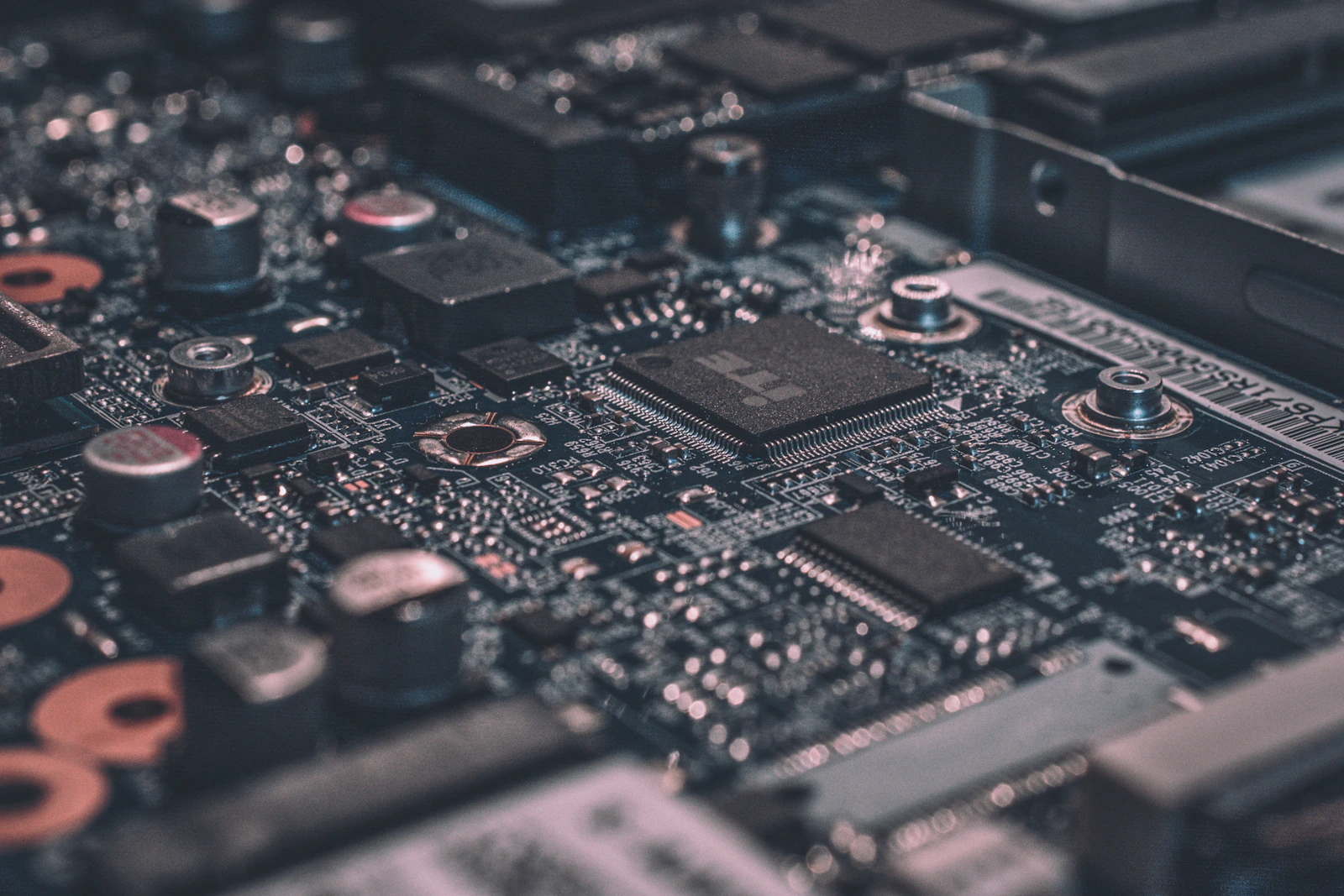
Photo by Alexandre Debiève on Unsplash
Arm Built a Chip. The x86 Monopoly Just Blinked.
/ 15 min read
Table of Contents
Thirty-five years of blueprints, then one punch to the jaw
Arm Holdings shipped its first chip on Monday, and the semiconductor industry is still processing the shock. For thirty-five years, Arm operated as the invisible architect of modern computing — licensing instruction set designs to Apple, Qualcomm, Amazon, Google, and virtually every company that puts a processor in a device. The company made billions by selling blueprints and never touching silicon. That era ended on March 24, 2026, when CEO Rene Haas stood on a stage in San Francisco and unveiled the Arm AGI CPU, a 136-core data center processor built on TSMC’s 3nm process node, designed to power the agentic AI workloads that are redefining what a server does. Meta is the lead customer. OpenAI, Cloudflare, SAP, Cerebras, and SK Telecom have signed commercial commitments. More than fifty companies — including AWS, Broadcom, Google, Marvell, Micron, Microsoft, Nvidia, Samsung, SK hynix, and TSMC itself — have publicly backed Arm’s expansion into production silicon. The stock surged sixteen percent on the news.
The raw specifications read like a statement of intent. Each AGI CPU packs up to 136 Neoverse V3 cores running at 3.2 GHz all-core and 3.7 GHz boost, drawing 300 watts — the same thermal envelope as a high-end AMD EPYC. Twelve channels of DDR5 memory at 8800 MT/s deliver more than 800 GB/s of aggregate bandwidth, or roughly 6 GB/s per core at sub-100-nanosecond latency. Arm claims the chip delivers more than two times the performance per rack compared with the latest x86 platforms, enabling up to $10 billion in capital expenditure savings per gigawatt of AI data center capacity. In air-cooled configurations, a single rack houses 8,160 cores. Liquid-cooled deployments push past 45,000 cores per rack. These are not incremental improvements over existing Arm-based server chips like AWS Graviton or Google Axion — they represent a fundamentally different density and performance tier that only a purpose-built, vertically optimized silicon product can achieve.
The strategic logic is inseparable from the economics. Arm reported record revenue of $4.01 billion in fiscal year 2025, a 24 percent year-over-year increase, with gross margins hovering near 96 percent — the kind of profitability that comes from selling intellectual property rather than physical products. But Haas told investors that the AGI CPU alone is projected to generate $15 billion in revenue by 2031, with total company revenue reaching $25 billion and earnings per share hitting $9. That is a fourfold increase from current levels, and it depends entirely on Arm’s ability to capture a share of the physical silicon market it has spent three decades enabling for others. HSBC responded by double-upgrading Arm stock to Buy and more than doubling its price target to $205, reflecting a conviction that the business model transition from licensor to manufacturer represents a structural expansion of Arm’s addressable market.
Here is the proprietary calculation that frames what Arm is actually attempting. The global data center CPU market is projected to reach $28 billion by 2034, according to Precedence Research. Arm-based processors currently hold approximately 40 percent of the cloud data center market, according to the Futurum Group — a share driven entirely by chips designed by Arm’s licensees, not by Arm itself. If Arm can capture even 20 percent of the physical silicon market within its own architecture’s installed base while continuing to collect royalties on every chip its licensees produce, the company transforms from an intellectual property tollbooth into a vertically integrated semiconductor powerhouse that competes with and collects rent from the same companies simultaneously. No semiconductor company has ever attempted this particular maneuver at this scale.
The Meta blueprint and the agentic AI thesis
Meta’s role as lead partner on the AGI CPU reveals something more significant than a procurement deal — it exposes the architectural shift that is quietly restructuring how hyperscalers think about compute. Mark Zuckerberg’s company is not buying Arm’s chip to replace its GPU clusters. Meta is deploying the AGI CPU alongside its custom Meta Training and Inference Accelerator, or MTIA, to handle the orchestration layer that sits between accelerators and applications — the CPU-side workload management that coordinates data movement, manages memory hierarchies, and runs the increasingly complex agent frameworks that power Meta’s family of apps.
This is the thesis embedded in Arm’s naming convention. The “AGI” in AGI CPU does not refer to artificial general intelligence in the existential sense — it refers to the company’s bet that agentic AI workloads will drive the next exponential increase in CPU demand within data centers. When an AI agent autonomously navigates a multi-step workflow — booking travel, managing code deployments, orchestrating customer service conversations — the accelerator handles the model inference, but the CPU handles everything else: context management, tool calling, memory retrieval, API orchestration, and the decision logic that determines what the agent does next. As agent frameworks like OpenClaw proliferate and autonomous systems move from demos to production, the ratio of CPU cycles to GPU cycles per AI transaction is rising, not falling. Arm is positioning the AGI CPU as the silicon foundation for that shift.
The competitive landscape makes Meta’s endorsement even more consequential. AWS builds Graviton processors on Arm’s architecture. Microsoft developed Cobalt, its custom Arm chip for Azure. Google created Axion for its cloud infrastructure. Each of these hyperscalers has invested hundreds of millions of dollars building proprietary Arm-based silicon tailored to their specific workloads. Arm’s decision to build its own competing chip creates an extraordinary dynamic: the company whose blueprints enabled its customers’ custom silicon ambitions is now selling finished processors into the same data centers. Meta’s willingness to adopt the AGI CPU despite having its own custom silicon program suggests that the performance and density advantages of Arm’s vertically optimized design exceed what even a company with Meta’s engineering resources can achieve by licensing the IP and building independently.
The SemiAnalysis newsletter captured the broader trend succinctly: CPUs are back. The narrative that GPUs would consume all meaningful compute demand in AI infrastructure was always an oversimplification. Large language model inference is memory-bandwidth-bound at small batch sizes, and the orchestration overhead of agentic systems is CPU-bound by definition. As AI workloads diversify from monolithic model training toward heterogeneous inference serving — where millions of concurrent agents each require low-latency CPU-side decision making — the market for high-density, power-efficient server CPUs is expanding faster than at any point in the last decade. Arm’s 2x-per-rack density advantage translates directly into fewer data centers, fewer power contracts, and fewer cooling systems per unit of AI capability deployed. For hyperscalers spending tens of billions annually on infrastructure, that density premium is worth more than any benchmark score.
The financial architecture of the Meta deal also deserves scrutiny. Arm has historically generated revenue through upfront licensing fees plus per-unit royalties — a model with extraordinary margins because Arm bears none of the manufacturing cost or risk. By selling physical silicon, Arm takes on inventory risk, supply chain complexity, and the capital intensity of maintaining a product line through multiple process node generations. The tradeoff is revenue scale: a $15 billion silicon business dwarfs what even the most favorable royalty terms could generate. But the margin profile will look fundamentally different. Arm’s 96 percent gross margins will compress toward the 50-60 percent range typical of fabless semiconductor companies that manufacture through TSMC. Investors cheered the revenue growth story, but the margin compression story has not yet been priced in — and it will matter when the AGI CPU moves from design wins to volume production.
The licensee revolt and the Qualcomm problem
The most dangerous consequence of Arm’s silicon gambit is not competitive — it is relational. For thirty-five years, Arm’s business model depended on a simple compact: we design the architecture, you build the chips, and we never compete with you. That compact is now broken, and the licensees know it. Qualcomm has already taken its fight to antitrust regulators on three continents, filing complaints with the European Commission, the U.S. Federal Trade Commission, and the Korea Fair Trade Commission alleging that Arm is using its market dominance to stifle third-party innovation in favor of its own physical products. The timing is not coincidental — Qualcomm’s complaints landed weeks before the AGI CPU launch, suggesting the chip designer’s legal team anticipated exactly this move.
The structural conflict is genuine and potentially irreconcilable. AWS spent years developing Graviton into one of the most cost-effective server processors in cloud computing. Microsoft invested heavily in Cobalt. Google built Axion to optimize its internal workloads. Each of these companies pays Arm royalties for the architectural license that makes their custom chips possible. Now Arm is selling a chip that competes directly with their products — while continuing to collect royalties on those same competing products. The economic incentive for hyperscalers to accelerate investment in RISC-V, the open-source instruction set architecture that requires no licensing fees and carries no risk of vertical integration by the architecture owner, has never been stronger. Arm’s management has characterized the AGI CPU as “additive” rather than competitive, but that framing strains credulity when the chip targets the same 1U server chassis, the same data center racks, and the same workloads that Graviton, Cobalt, and Axion serve today.
The Qualcomm litigation history provides a cautionary preview. Arm sued Qualcomm in 2022 over the chip designer’s use of Nuvia-derived Oryon cores, arguing that Qualcomm’s acquisition of Nuvia required renegotiation of licensing terms. A Delaware jury sided with Qualcomm in December 2024, and the judge subsequently dismissed Arm’s remaining claims, delivering what Qualcomm called a “complete victory.” But the underlying tension — Arm’s desire to control how its architecture is used versus licensees’ desire to innovate freely within the licensed framework — has not been resolved. It has metastasized. Qualcomm is now arguing to regulators that Arm’s entry into physical silicon represents the culmination of a pattern of anticompetitive behavior: restricting licensee flexibility, raising royalty rates, and ultimately building competing products that leverage thirty-five years of architectural lock-in.
The x86 incumbents face a different calculus. Intel, which has struggled through years of manufacturing setbacks and market share erosion, now confronts an Arm ecosystem that is no longer fragmented across dozens of licensee implementations but concentrated behind a single, high-performance reference design. AMD’s position is more nuanced — its EPYC processors have captured roughly 40 percent of the x86 data center market, according to industry analysis, up from near zero in 2018. AMD’s growth came at Intel’s expense, but Arm’s AGI CPU threatens to compress the entire x86 category by redefining the performance-per-watt and density benchmarks that data center operators use to evaluate processor purchases. If Arm’s 2x-per-rack performance claim holds under production workloads, the savings in power, cooling, and physical space make the migration cost from x86 to Arm economically trivial for any operator building new infrastructure.
The geopolitical dimension adds another layer of complexity. Arm is a British company, headquartered in Cambridge, majority-owned by SoftBank (a Japanese conglomerate), designing chips manufactured by TSMC (a Taiwanese foundry) for deployment in American data centers. Every node in that supply chain intersects with the semiconductor export controls, trade restrictions, and national security frameworks that the United States, China, and the European Union are actively reshaping. A vertically integrated Arm that controls both the architecture and the leading physical implementation of that architecture concentrates more strategic leverage in a single corporate entity than any government regulator has yet contemplated. The questions being asked about Nvidia’s dominance in AI accelerators will inevitably be asked about Arm’s potential dominance in AI-optimized CPUs — and the answers will shape semiconductor policy for the next decade.
The five-year clock and what operators should do before the racks arrive
Arm’s $15 billion revenue target for the AGI CPU by 2031 is simultaneously the company’s greatest opportunity and its most dangerous commitment. The target implies annual silicon revenue scaling from near zero today to roughly $3 billion by 2028 and accelerating thereafter — a trajectory that requires Arm to build a world-class product organization, a global supply chain, a customer success operation, and a technical support infrastructure from scratch, while simultaneously maintaining the licensing relationships that generate 100 percent of its current revenue. No company in the modern semiconductor era has successfully executed a transition of this magnitude without cannibalization, partner defection, or execution failures that cost years of market momentum.
The early signs are encouraging but insufficient to declare victory. Meta’s endorsement carries enormous weight — any chip that Zuckerberg’s infrastructure team adopts for production deployment has survived a level of technical scrutiny that no marketing claim can replicate. The breadth of the ecosystem commitment — fifty-plus companies spanning cloud providers, accelerator designers, networking companies, and memory manufacturers — suggests that Arm’s technical specifications have passed muster with the engineering organizations that matter most. But design wins are not revenue. The gap between “commercial commitment” and “volume purchase order” is measured in quarters, and the gap between “volume purchase order” and “profitable silicon business” is measured in years. Arm must navigate both while defending against licensee defection to RISC-V, competitive responses from Intel and AMD, and the ever-present risk that TSMC capacity constraints delay production scaling at precisely the wrong moment.
The broader data center market dynamics favor Arm’s timing. Global data center capital expenditure is projected to exceed $400 billion in 2026, driven by hyperscaler AI infrastructure buildouts that show no sign of decelerating. Every new gigawatt of data center capacity represents a procurement decision about which CPU architecture will power the server fleet. The agentic AI thesis — that CPU demand will grow faster than GPU demand as AI systems transition from training to inference-heavy, agent-orchestrated production workloads — is gaining institutional support from infrastructure planners at every major cloud provider. If the thesis holds, the AGI CPU arrives at precisely the moment when the market’s CPU needs are outgrowing what existing designs can deliver at acceptable power and density levels.
For technology operators evaluating their infrastructure roadmaps, the AGI CPU announcement demands immediate reassessment of three assumptions. First, the presumption that Arm-based servers are “alternative” or “secondary” to x86 is no longer tenable. With 40 percent cloud market share and a purpose-built chip targeting the fastest-growing workload category, Arm is the default architecture for new AI infrastructure deployments, and x86 is the legacy platform requiring justification. Second, the assumption that custom silicon programs (Graviton, Cobalt, Axion) represent the optimal path to Arm-based performance may need revisiting — if a merchant chip from Arm itself delivers superior density and performance, the ROI of maintaining a custom silicon team diminishes. Third, any multi-year infrastructure plan that does not account for the possibility of Arm capturing majority CPU share in cloud data centers by 2030 is planning for a world that may not exist.
The operator checklist is straightforward but urgent:
- Audit every active and planned x86 server deployment for Arm compatibility. Identify workloads that can migrate without application-layer changes and prioritize them for early AGI CPU evaluation.
- Request technical briefings from Arm and at least two AGI CPU system integrators. Benchmark claims are meaningless without validation against your specific workload profiles.
- Evaluate your RISC-V exposure. If Arm’s licensee conflict accelerates hyperscaler investment in RISC-V alternatives, the architecture landscape could fragment further, and infrastructure plans should account for optionality.
- Model the total cost of ownership at Arm’s claimed 2x density advantage. If the math holds, the savings in power, cooling, and physical footprint justify migration costs for any deployment exceeding 10,000 cores.
- Monitor the Qualcomm antitrust proceedings. Regulatory outcomes will determine whether Arm can sustain its dual role as architecture licensor and silicon competitor, or whether it will be forced to divest one business to preserve the other.
Arm’s first chip is not just a product launch — it is the opening move in a restructuring of the semiconductor industry’s most important business relationship. The company that drew the blueprints for 99 percent of the world’s mobile processors has decided that blueprints are not enough. Whether that decision creates $15 billion in new value or destroys decades of partnership trust depends on execution, and the clock started ticking on Monday.
In other news
Figure 3 walks the White House halls — First Lady Melania Trump hosted Figure AI’s humanoid robot at a global education summit on Wednesday, where the machine greeted foreign dignitaries in eleven languages before walking back down the Cross Hall on its own two feet. CEO Brett Adcock called it “the first humanoid robot in the White House,” while Melania envisioned AI tutors named Plato in every home (CNN).
GPT-5.4 lands with a million-token context window — OpenAI released GPT-5.4 on March 5, its most capable model to date, featuring a one-million-token context window and the ability to autonomously execute multi-step workflows across software environments. The model scored 75 percent on the OSWorld-V benchmark, which simulates real desktop productivity tasks (Crescendo AI).
Cursor admits Composer 2 runs on Kimi K2.5 — Cursor executives acknowledged that their Composer 2 model uses Moonshot AI’s Kimi K2.5 as a base, with roughly 25 percent of compute from the base model and 75 percent from Cursor’s proprietary reinforcement learning. Moonshot confirmed the arrangement was an “authorized commercial partnership” facilitated through Fireworks AI (Build Fast with AI).
Google opens Personal Intelligence to all U.S. users — Google expanded its Personal Intelligence feature, which connects Gemini across Gmail, Google Photos, and Chrome, to all American users after previously restricting it to paying subscribers. The move intensifies the competition for AI-powered personal assistants that integrate across productivity tools (Crescendo AI).
Qwen 3.5 crushes benchmarks at laptop scale — Alibaba’s Qwen team released the Qwen 3.5 Small Model Series spanning 0.8B to 9B parameters, with the 9B variant achieving a GPQA Diamond score of 81.7 — surpassing OpenAI’s gpt-oss-120B on the same benchmark while running on standard laptops and mobile devices (LLM Stats).